
It’s a period so different in the digital world and customers’ expectations have evolved dramatically. Users expect services to be responsive, provide them with customized recommendations and enable them to communicate with ease over all possible communication platforms. These aspirations put businesses on the hunt to use Artificial Intelligence (AI) as a key ingredient in Customer Relationship Management (CRM).
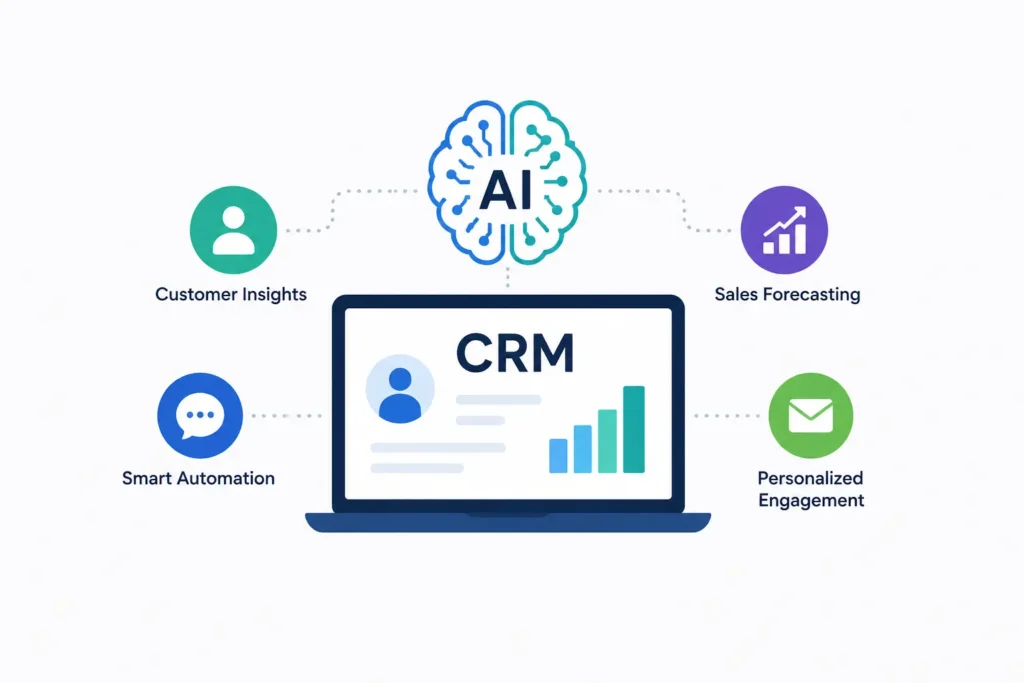
Today, the CRM has become so much more than a customer database. They have grown into smart platforms which analyze data, automate processes, forecast customer actions, and assist businesses in making quicker and more precise decisions. Archiving Powered by AI: Smarter Customer Engagement, Stronger Business Growth.
The Evolution of the CRM Systems
The traditional CRM products were targeted at the management of only the principal data for their key customers, sales down-serve, and contact details. These functions are still vital but this alone is not enough in a competitive market.
Today’s CRM systems capture information from emails, websites, social media, customer support interactions, customer purchasing history and marketing campaigns. With the power of AI, this vast data is now capable of being analysed and subject to powerful insights that can be applied to improve the customer experience and increase revenue for businesses.
Instead of the standard CRM system that merely records customer interactions, Ai powered CRM systems can discern the subsequent actions that your customers need to take.
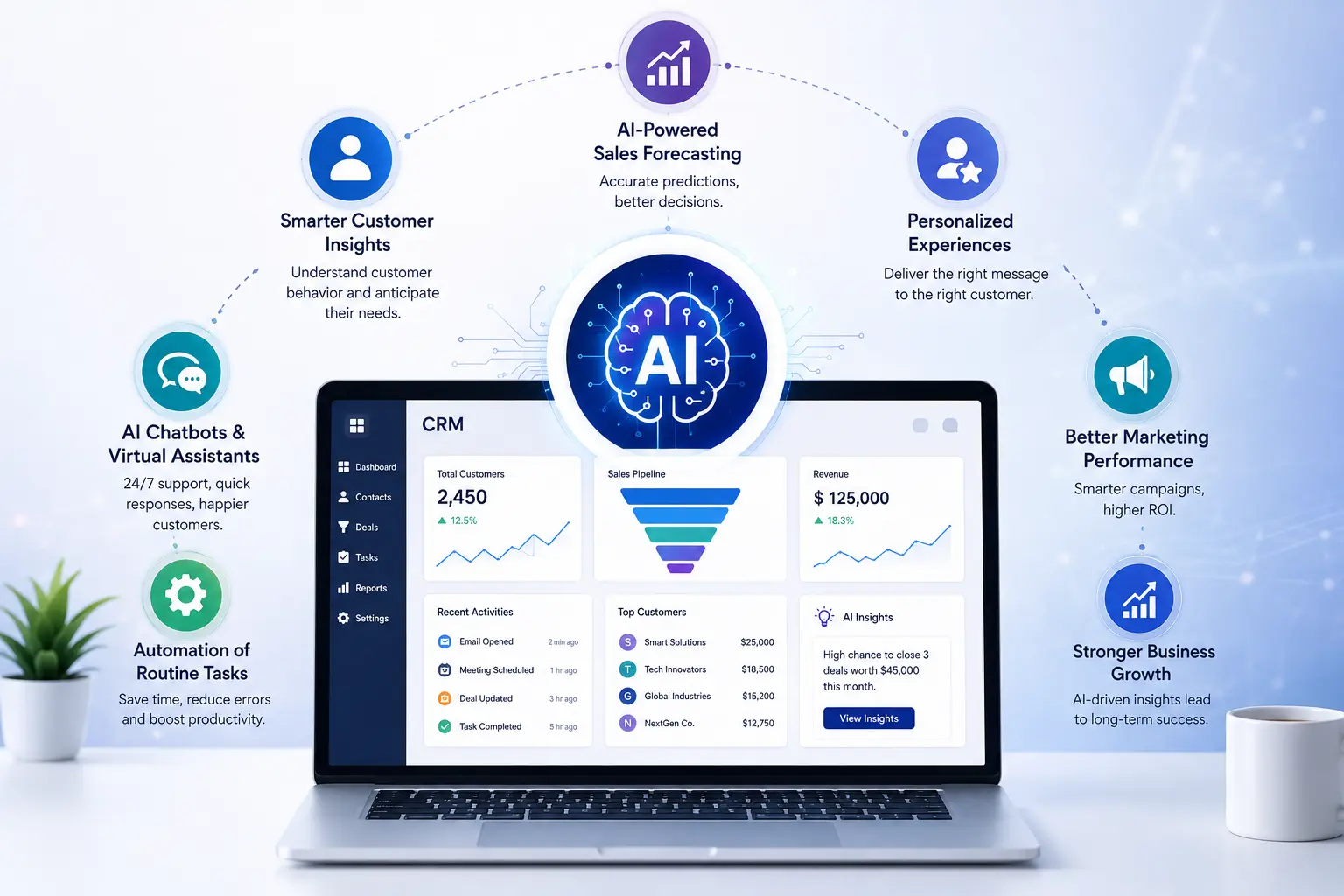
Smarter Customer Insights
AI’s most beneficial payoff has been the capacity to uncover trends in service provider actions. AI can review and analyze past data to detect its patterns that may be difficult to manually spot.
For example, with Artificial Intelligence (AI), you can determine customers who are wanting to buy something else, pre-determine which leads are more likely to convert and when a customer signals that she is about to walk out the door on a product or service.
Businesses can be proactive and not have to react to opportunities in the past when they are equipped with these insights.
Personalized Customer Experiences
Today, personalisation is one of the most critical parameters of competition. With AI power, CRM systems can offer more target custom consumer experiences based upon the individual choices and actions of consumers.
Instead of sending an email to every customer, a savvy company can put together email segments, product suggestions, pricing deals and support approaches and engagements uniquely for each and every customer.
The content that’s relevant to the customer will be relevant to them, and this may make them more likely to become a customer someday and build a business relationship.
Routine Tasks Done Through the Use of Automation
A large number of sales persons and customer service agents are forced to perform numerous repetitive tasks. AI can reduce this burden by automating paper-based, repetitive tasks, such as follow-up reminders, appointment scheduling, ordering, order tracking, and marketing, among other tasks such as customer segmenting and customer assigning.
Employees can focus on higher value activities like relationship building, problem solving and strategic planning by leveraging automation.
That not only boosts productivity it also decreases the likelihood of human error.
The use of Artificial Intelligence Chatbots and Virtual Assistants
One of the features of today’s AI-powered CRM systems is the chatbots. These virtual assistants can help answer questions that customers have questions about, qualify leads, schedule appointments, give product information and help customers throughout the day.
AI Chatbots also learn through machine learning algorithms, allowing them to handle more sophisticated and complicated customer enquiries than conventional chatbots.
This can result in quicker response times, reduced support expenses and enhanced customer satisfaction, which are highly beneficial for many businesses.
Better Marketing Performance
Furthermore, AI can enhance the performance of marketing by assessing the effectiveness of marketing campaigns and identifying the most effective results.
Automated and real-time measurement and analysis of customer responses, engagement levels, conversion rates and channel performance – all this is possible with the help of CRM. AI will then suggest the audiences, messages and timing of an ad campaign.
The benefit of this process is that it is data-driven which will help the marketer maximize his/her return on investment and not have to spend advertising dollars on ads that are not working.
The Future of AI in CRM
The role of AI in CRM is only going to be a bigger one in the near future. Features like predictive analytics, conversational AI, voice assistants, sentiment analysis, and autonomous workflow automation are likely to be more prevalent in the future.
The next generation of CRM systems will send not only information, but even recommendations, automate decision making processes and assist in responding to customer needs on the fly.
Final Thoughts
CRM software has changed from mere record-keeping to a smart enterprise platform with the help of artificial intelligence. AI not only enhances customer insights, automates repetitive tasks, personalizes customer experiences, but also facilitates improved decision-making—all working to establish robust customer relationships and boost efficiency.
In today’s digital age, where customer satisfaction is paramount, AI-powered CRM tools offer businesses a significant edge in customer engagement, sales efficiency, and long-term success. With growing competition in the market, intelligent CRM systems will be a growing part of creating incredible customer encounters.